As an Amazon affiliate, I earn from qualifying purchases.
These are the best solar generators for home backup at every capacity tier, tested and ranked.
Powered by Peer Pressure
 My neighbor just had solar panels installed on his house and immediately called me asking which kit to pair with them for home backup. He was done with gas generators after last winter – and so was I.
That sent me back through my notes on the EcoFlow Delta Pro and BLUETTI Apex 300 setups I’ve tested, and into another 25 hours of research comparing the best solar generators for home backup at every capacity tier. My neighbor ended up with the Jackery 4000 Kit, and I’ve been watching his system run smoothly through two nor’easters since that call.
The market backs that timing—Fortune Business Insights projects the global solar generator market growing from $591 million in 2024 to over $1 billion by 2032.
Key Takeaways
Here’s what I found researching and testing the best solar generators for home backup:
- For Small-to-Mid Homes: The Jackery Solar Generator 4000 Kit, EcoFlow Delta Pro, and EcoFlow DELTA 2 Max cover essential circuits with 2,048–4,085Wh of LFP storage and flexible solar input.
- For Larger Homes: The BLUETTI Apex 300 + B300K, OUKITEL P5000 Pro, and Anker SOLIX F3800 deliver 3,840–6,000W output with 120V/240V dual-voltage for demanding home loads.
- For Whole-Home Backup: The Anker SOLIX E10 is built for permanent installation, with up to 90kWh of capacity and 9kW of solar input for days-long whole-home coverage.
Best Solar Generators for Home Backup Compared
This table compares the top five best solar generators for home backup side by side – see Products 6 and 7 below for our two newest additions.

Last update on 10/19/2026 / Affiliate links / Images from Amazon Product Advertising API
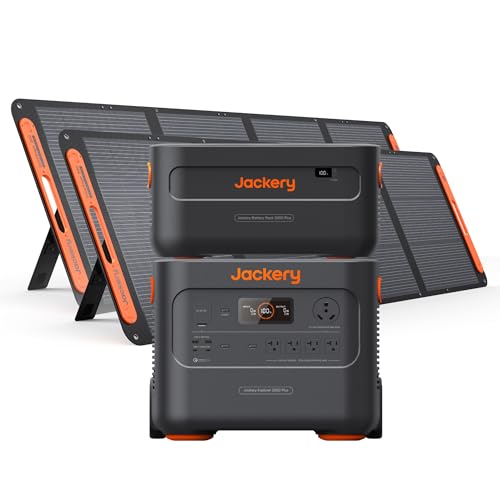
#1 – Jackery Solar Generator 4000 Kit – Editor’s Choice

Key Specifications
- Capacity: 4,085Wh LFP, expandable to 24kWh
- AC output: 3,000W continuous
- Solar input: 1,400W max (DC)
- Included panels: 2x 200W SolarSaga (400W total)
- Weight: 97 lbs (station + expansion battery combined)
Mini Review
For buyers who want the most approachable of the best solar generators for home backup, the Jackery 4000 Kit starts the conversation in the right place – 4,085Wh of LFP capacity, two 200W panels included, and the whole system boxed up and ready to run without a separate panel purchase.
The Explorer 2000 Plus at the core delivers 3,000W of continuous output and accepts up to 1,400W of solar input – enough to top off the station in under four hours on a bright day. Stack additional battery packs and you’re looking at 24kWh total, making real multi-day backup achievable.
The constraint is 120V-only output – no 240V service here. A neighbor of mine chose this exact kit on my recommendation and ran it through two back-to-back nor’easters without a hitch.
Pros
- 400W of solar panels included in the kit
- 4,085Wh LFP capacity, expandable to 24kWh
- 3,000W output covers most essential home circuits
- 48.5-lb hub is manageable for one person
Cons
- 120V only, no split-phase output option
- 1,400W solar ceiling limits off-grid recharge speed
- Expansion requires Jackery-brand battery packs only
Video Review
Video review by Melba Watson
Where to Get It
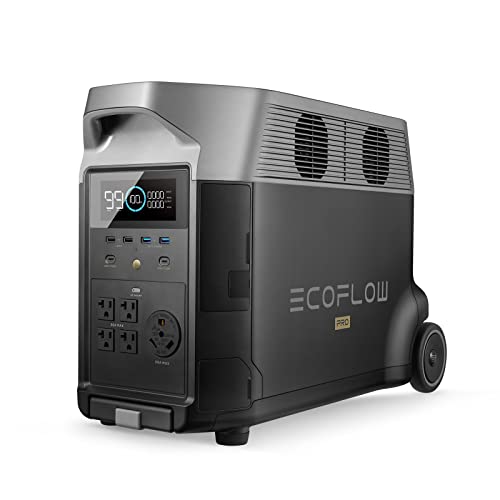
#2 – EcoFlow Delta Pro + Panels – Best Expandable

Key Specifications
- Capacity: 3,600Wh LFP, expandable to 25kWh
- AC output: 3,600W (120V), up to 7,200W (240V with dual units)
- Solar input: 1,600W max
- Weight: 47.4 lbs
- Cycle life: 3,500 cycles to 80% capacity
Mini Review
The EcoFlow Delta Pro is the veteran of this list – a 3,600Wh station I’ve tested in real deployments, and the one I’d hand to a buyer who wants maximum panel compatibility with a proven track record and lightweight portability.
At 47.4 lbs, it’s the lightest unit here that still covers substantial home loads. Comparing the best solar generators for home backup at this capacity tier, the Delta Pro is the easiest to reposition when a storm is actually rolling in – which, in practice, matters more than most buyers expect.
The solar ceiling at 1,600W is the main limitation – it won’t recharge as fast as the BLUETTI Apex 300. For expandable backup with proven software and broad solar compatibility, it’s still a strong pick.
Pros
- 47.4 lbs makes it the lightest unit here
- 3,600W output expands to 7,200W with dual units
- Expandable to 25kWh with Smart Extra Batteries
- Compatible with most third-party solar panels
Cons
- 1,600W solar ceiling is low for this capacity tier
- Solar panels sold separately from the base station
- 240V output requires purchasing a second unit
Video Review
🎥 Video Credit: The Traveler Tool Kit
Where to Get It
#3 – BLUETTI Apex 300 + B300K – Best High-Output

Key Specifications
- Capacity: 5,836.8Wh LFP (2,764.8Wh base + 3,072Wh B300K), expandable to 58kWh
- AC output: 3,840W continuous, 7,680W surge
- AC voltage: 120V/240V dual voltage
- Solar input: 2,400W max (6,400W with optional SolarX 4K)
- Weight: 111 lbs (hub + one B300S battery)
- Cycle life: 6,000+ cycles to 80% capacity
Mini Review
The BLUETTI Apex 300 + B300K is among the best solar generators for home backup at the high-output tier, replacing the AC500 as BLUETTI’s flagship and arriving with a meaningful upgrade list. The headline is 120V/240V dual-voltage output, with the highest cycle life rating on this entire list at 6,000+ cycles to 80%.
At 3,840W continuous (7,680W surge), the Apex 300 handles any standard home load and most motor-heavy appliances without issue. TurboBoost AC charging refills the station from 0 to 100% in under 65 minutes when grid power returns – the fastest full recharge here.
The 2,400W solar input handles a full recharge in a good sun day, and the optional SolarX 4K accessory expands solar acceptance to 6,400W for near-generator speed when you need it. Stack additional B300K batteries to scale up to roughly 58kWh of total storage.
Unlike the old AC500, which was a pure inverter hub requiring an external battery to function at all, the Apex 300 is a self-contained station with its own internal cell pack – fully operational right out of the box.
Pros
- 120V/240V dual voltage handles split-phase home loads
- 6,000+ cycle life is best in class on this list
- TurboBoost charges 0-100% in under 65 minutes
- Solar expandable to 6,400W with optional SolarX 4K
Cons
- Solar panels sold separately
- 150 lbs combined weight requires two people to install
- No built-in carry handle; requires a dolly for repositioning
Video Review
In-depth breakdown: The Solar Lab
Where to Get It
#4 – OUKITEL P5000 Pro + 200W Panel – Best Value

Key Specifications
- Capacity: 5,120Wh LFP
- AC output: 3,600W continuous, 6,000W peak
- Solar input: 1,000W max (MPPT)
- Included panels: 1x 200W
- Cycle life: 5,000+ cycles to 80% capacity
Mini Review
The OUKITEL P5000 Pro brings 5,120Wh of LFP capacity to the value tier – more raw storage than most kits at this price point, and the 200W solar panel is included in the bundle so you’re charging from day one without a separate purchase.
At 3,600W continuous (6,000W peak), the P5000 Pro handles the full list of home essentials: refrigerators, sump pumps, HVAC fans, and multiple device charging simultaneously. The 5,000+ cycle LFP rating means real longevity – at one full cycle per day, that’s over 13 years of daily use before the cells hit 80% capacity.
The 1,000W solar ceiling is the main constraint on standalone recharge speed. Supplement with AC charging (1,800W) and you can refill 0-80% in under 90 minutes when the grid is available. The EPS seamless switch handles automatic grid-to-battery failover in under 30ms – Wi-Fi and Bluetooth app monitoring are included standard.
When you compare the best solar generators for home backup at this capacity and price tier, the P5000 Pro earns its spot on value and included hardware alone.
Pros
- 5,120Wh LFP at a value-tier entry price
- 200W solar panel included in the bundle
- 5,000+ cycle life rated to 80% capacity
- EPS auto-switch under 30ms and Wi-Fi + BT app control
Cons
- 120V only – no 240V split-phase output
- 1,000W solar ceiling limits standalone recharge speed
- Not expandable with additional battery packs
Where to Get It
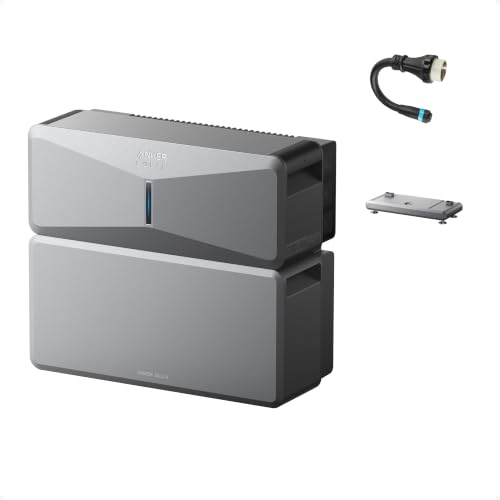
#5 – Anker SOLIX E10 – Best Whole-Home

Key Specifications
- Capacity: 6,144Wh base, expandable to 90kWh
- AC output: 7.680W rated output
- Solar input: 9,000W max
- Installation: Wall or floor mount (stationary)
- Certifications: UL9540, UL9540A certified
Mini Review
The Anker SOLIX E10 is the only unit on this list that isn’t a portable station. It’s a permanent wall or floor-mounted whole-home backup system that plays in a completely different league.
Solar panels are sold separately, but the E10 accepts up to 9kW of solar input and integrates directly with existing rooftop arrays from day one. Battery capacity starts at 6kWh and scales to 90kWh, with 7,680W of rated AC output and a UPS switchover of 20 milliseconds or less when the grid drops.
The trade-off is cost and commitment. A licensed electrician is required for installation, and the starting investment is the highest on this list by far. For buyers ready to go all-in on whole-home backup, nothing here comes close.
Pros
- 9kW solar input far exceeds portable alternatives
- Expandable from 6kWh to 90kWh whole-home storage
- 7.680W output runs full homes during outages
- UPS switchover in ≤20ms during grid outages
- UL9540 certified for safe home installation
- Seamless grid solar integration from day one
Cons
- Licensed electrician required for proper installation
- Not portable – wall or floor mount only
- Highest starting investment on this list by far
Where to Get It
#6 – EcoFlow DELTA 2 Max – Best Entry/Mid

Key Specifications
- Capacity: 2,048Wh LFP, expandable to 6,144Wh
- AC output: 2,400W continuous
- Solar input: 1,000W max (MPPT)
- Weight: 49 lbs
- Cycle life: 3,000+ cycles to 80% capacity
Mini Review
For buyers who want the most compact entry point among the best solar generators for home backup on this list, the EcoFlow DELTA 2 Max delivers real home backup capacity in a 49-lb portable package without stepping up to a 90+ lb station.
At 2,048Wh and 2,400W of continuous output, it covers essential circuits – refrigerator, router, lighting, and device charging – for a full day of backup on a single charge. Expand to 6,144Wh with extra Smart Batteries when your needs grow, and a 1,000W solar ceiling makes same-day recharge practical on a clear afternoon.
The X-Stream fast charging refills 0–80% in under 65 minutes from AC when grid power returns. EcoFlow’s app integration is among the best in class, with real-time monitoring and remote control via Wi-Fi or Bluetooth.
Pros
- 2,048Wh LFP at 49 lbs – best weight-to-capacity ratio here
- Expandable to 6,144Wh with Smart Extra Batteries
- X-Stream charges 0–80% in under 65 minutes from AC
- Best-in-class EcoFlow app for monitoring and control
Cons
- 120V only – no 240V split-phase output
- 1,000W solar ceiling is modest at this capacity
- Solar panels sold separately
Video Review
Watch it in action: HelpfulBest
Where to Get It
#7 – Anker SOLIX F3800 – Best Portable Powerhouse

Key Specifications
- Capacity: 3,840Wh LFP, expandable to 26.9kWh
- AC output: 6,000W continuous, 120V/240V split-phase
- Solar input: 2,400W max (MPPT)
- Weight: 154 lbs
- Cycle life: 3,000+ cycles to 80% capacity
Mini Review
The Anker SOLIX F3800 is the most powerful portable unit among the best solar generators for home backup on this list – 6,000W of continuous output with 120V/240V split-phase capability in a portable form factor that requires no licensed electrician to install.
At 3,840Wh base (expandable to 26.9kWh), the F3800 covers whole-home essential circuits and handles heavy appliances – central air, electric dryers, EV charging – that most portable stations can’t touch. The 2,400W solar input ceiling matches the BLUETTI Apex 300 and makes full-day recharge realistic in good weather.
The 154-lb weight puts it at the heavy end of portable – the included wheels are essential on anything other than a flat garage floor. For buyers who want whole-home power without a permanent install, this is the pick.
Pros
- 6,000W output handles heavy appliances including central AC
- 120V/240V split-phase – no licensed electrician required
- Expandable to 26.9kWh with Anker battery packs
- 2,400W solar input charges in one good sun day
Cons
- 154 lbs – heavy even with included wheels
- Solar panels sold separately
- Highest per-unit price among portable options here
Where to Get It
Frequently Asked Questions
Here are the most common questions I hear about the best solar generators for home backup.
1. What are the best solar generators for home backup if I already have roof solar?
When you already have roof solar, the inverter and battery combination matters most. The Anker SOLIX E10 and BLUETTI Apex 300 both offer direct roof solar integration – the E10 via a licensed grid-tie install, the Apex 300 via a DIY-friendly home integration kit. Match your roof panel wattage to the battery’s solar input ceiling for optimal performance.
2. How many solar panels do I need for solar generators for home backup?
Panel count depends on your kit’s solar input ceiling and how fast you need to recharge. The best solar generators for home backup range from 1,400W to 9,000W of solar input. The OUKITEL P5000 Pro ships with a 200W panel included – a solid start – but most setups benefit from adding panels to cut overall recharge time.
3. Are the best solar generators for home backup safe to run indoors?
All battery-based solar generators run silently and emit no fumes – completely safe to use indoors. Unlike gas generators, which produce deadly carbon monoxide, you can place these units in a garage, utility room, or basement without any ventilation concerns. Check that ambient temperature stays within the manufacturer’s range, typically 32°F-104°F for LFP units.
4. What’s the difference between solar generators for home backup and a full solar panel system?
A dedicated solar panel system is permanently installed and grid-tied. The best solar generators for home backup are portable or semi-permanent setups pairing a battery with panels you can add, move, or reposition. A portable solar kit is a great option for renters and road trips, while a complete solar power system is better for fixed backup plans.
5. Can the best solar generators for home backup power a whole house?
Powering every circuit in a whole house during an outage requires significant capacity. Most kits cover essential circuits – refrigerator, Wi-Fi, lights, and phone charging – for one to three days on a full charge. The Anker SOLIX E10, with up to 90kWh and panel integration, comes closest to whole-house coverage without a dedicated solar installation.
Best Solar Generators for Home Backup: Buyer’s Guide
Here’s what to look for before buying the best solar generators for home backup — the specs that separate a system that lasts from one that disappoints on the first real outage.
How Much Power Do You Actually Need?
- Start by listing must-run loads: fridge, router, lights, sump pump, and phones for everyone – most homes land in the 3-6kWh range for overnight backup
- Map those loads against available solar so the kit can harvest enough to cover a multi-day outage
- Whole-home coverage or off-grid living requires a larger unit – typically 6kWh+ with strong solar input
Capacity vs. Output: Two Different Numbers
- Capacity (Wh) = your fuel tank – how long you can run
- Output (W inverter rating) = your flow rate – what you can run simultaneously
- A high-capacity unit with a weak inverter still fails on pump and power tool startup surges
- Look for AC outlets, USB-C ports, and USB-A ports to cover all electronic devices and cell phones
Solar Charging: Where the Right Kit Becomes Obvious
- Compare solar input wattage and charge controller design – range on this list is 1,400W to 9,000W
- For practical recharge in mixed weather, 1,500W-3,000W solar input is the sweet spot
- Some kits ship with solar panels; others require separate purchases – factor that into total cost
- Rigid panels are best for fixed installs; bifacial portable panels work better for flexible setups
Battery Chemistry: Long-Term vs. Lightweight
- Lithium iron phosphate (LFP): Top pick for home backup – longer cycle life, better thermal safety, and more reliable over years of repeated use
- Lithium-ion: Best when weight and portability matter more than cycle count
Outage Backup vs. Energy Independence
- For grid outage coverage, a mid-size solar power station is the right call
- For year-round off-grid living, buy a system that can scale both battery capacity and panel count
- The best solar generators balance output and real-weather recharge time – not just lab specs
Brands Worth Knowing at Every Tier
EcoFlow Delta Pro, Jackery Explorer with SolarSaga panels, Anker SOLIX F and C lines, Goal Zero Yeti setups, Bluetti EB platforms, and OUPES are the proven names. Sungold Power is a newer entry worth watching at the value end.

The Verdict
 That’s the full shortlist of the best solar generators for home backup I’d actually recommend. Here’s how the decision breaks down.
- Choose Jackery Solar Generator 4000 Kit if you want an approachable, panels-included setup for essential circuits with easy expansion built in.
- Choose EcoFlow Delta Pro if lightweight portability and broad solar panel compatibility matter most — at 47.4 lbs, it’s the easiest to reposition when a storm rolls in.
- Choose BLUETTI Apex 300 + B300K if you need 120V/240V dual-voltage output, 6,000+ cycle life, and TurboBoost recharge in under 65 minutes.
- Choose OUKITEL P5000 Pro if you want the most raw storage per dollar with a 200W solar panel already in the box.
- Choose Anker SOLIX E10 if whole-home coverage with direct roof solar integration is the goal and permanent installation isn’t a barrier.
- Choose EcoFlow DELTA 2 Max if you want a compact 2,048Wh entry point with 2,400W output — the best starting size for renters and smaller backup needs.
- Choose Anker SOLIX F3800 if you need portable 120V/240V split-phase power at 6,000W without a permanent install.
Whichever kit you land on, you are building a backup foundation that turns the power of the sun into quiet power and renewable energy for years.
Whether the goal is home backup security during grid failures or off-grid power on your own terms, these solar generators cover both directions. My guide on best portable power stations for whole home backup covers the no-panel side of the decision.

Love tech? Subscribe for iPhone tips, fun tech tips, unboxings, and reviews.
Subscribe Now