As an Amazon affiliate, I earn from qualifying purchases.
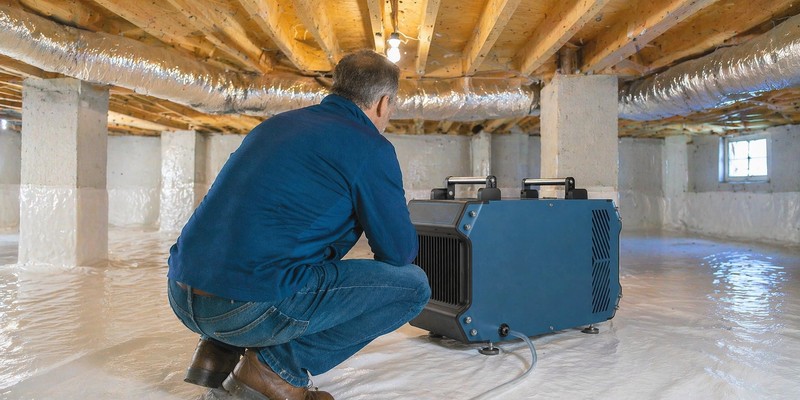
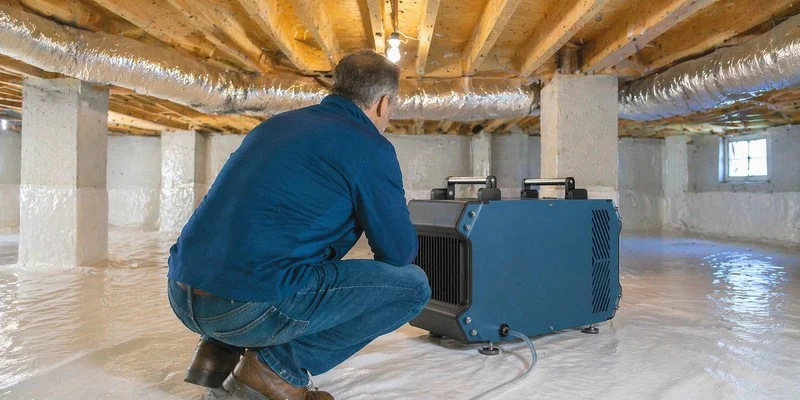
If you are looking for one of the best crawl space dehumidifiers for moisture removal, you’re in the right spot.
Moisture, Meet Your Match

I’ve used the AlorAir Sentinel HDi65 and Aprilaire E070 in my own home, so I know what matters: steady moisture removal, reliable drainage, and low-maintenance operation. I judged the other picks here by those same standards.
Demand is growing fast. According to Grand View Research, the dehumidifier market is projected to reach $5.12 billion by 2030.
If you’re trying to control humidity before it turns into mold, odors, or structural damage, these are the units worth considering.
Key Takeaways
Here are the key takeaways I found when testing and researching the best crawl space dehumidifiers.
-
Choose the AlorAir for compact crawl spaces, or the Aprilaire for stronger coverage and moisture removal.
-
Choose the ARGENDON for budget-friendly commercial power, or the Santa Fe for better efficiency and MERV-13 filtration.
-
Choose the MOUNTO if you need serious LGR-grade drying for extreme moisture or water damage recovery.
Best Crawl Space Dehumidifiers Comparison Table
The following table provides a side-by-side tech specs comparison of the best crawl space dehumidifiers.


Last update on 10/19/2026 / Affiliate links / Images from Amazon Product Advertising API
#1 – AlorAir Sentinel: Best for Small Spaces

Key Specifications
- Moisture removal: 55 PPD at AHAM (120 PPD at saturation)
- Coverage area: Up to 1,300 sq ft (crawlspace)
- Smart control: Wi-Fi + smartphone app (HDi65S version)
- Built-in pump: Yes, automatic drainage
- Operating temp: 33.8°F to 104°F
Mini Review
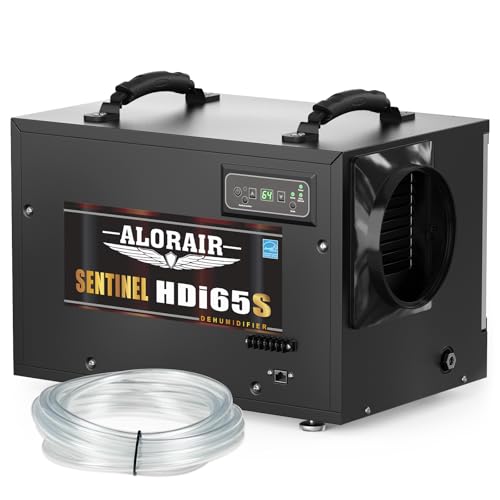
The AlorAir Sentinel HDi65 is one of the two units I run in my own crawlspace and earns the top spot among the best crawl space dehumidifiers for smaller spaces. It has a super compact design purpose-built for the tight clearances of low-clearance crawl spaces that kill residential units in the first season.
At 120 PPD at saturation (55 PPD AHAM), it pulls real pints of moisture from smaller crawls without a floor drain – the built-in condensate pump handles drainage automatically. The HDi65S variant adds Wi-Fi for remote humidity setpoint control from your smartphone.
The 1,300 sq ft cap is the main constraint—the Aprilaire E070 is the natural step up for larger spaces.
Pros
- Compact design built for low-clearance crawlspace installation
- Low temperature operation down to 33.8°F without freezing
- 44 lbs makes it manageable to carry into small spaces
- Wi-Fi app control with humidity setpoint monitoring
Cons
- 1,300 sq ft coverage limit for smaller crawl spaces only
- App features are basic compared to Aprilaire
- MERV-8 filter, not MERV-13 for allergen control
Video Review
🎥 Video Credit: Reviews Unscripted
Where to Get It
#2 – Aprilaire E070: Best Smart Pick

Key Specifications
- Moisture removal: 70 PPD
- Coverage area: Up to 2,800 sq ft
- Smart control: Wi-Fi + smart sensing (E070W model)
- Built-in pump: Yes, hose included
- Operating temp: 50°F to 104°F
Mini Review
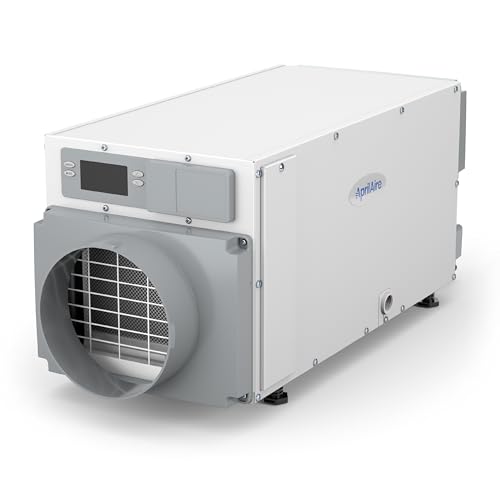
The Aprilaire E070 is the second unit I own, drawn in by the smart sensing as a smart home enthusiast, and it delivered exactly that. It steps up where the AlorAir tops out and is one of the best crawl space dehumidifiers for larger spaces. It delivers 70 pints of moisture removal per day and covers up to 2,800 sq ft, making it a strong fit for larger crawlspaces and partial basements.
Smart sensing starts the unit automatically when humidity climbs above target – configure once and forget it. The built-in pump and drain hose are included, a practical detail in tight areas where uphill drainage isn’t always an option.
Pros
- Handles crawlspaces up to 2,800 sq ft comfortably
- Smart sensing starts automatically on humidity trigger
- HVAC-ductable as a whole-house dehumidifier option
- 5-year warranty from an established HVAC brand
Cons
- Wi-Fi is a separate model upgrade (E070W)
- Bulkier footprint than purpose-built crawlspace units
- Higher starting investment than mid-tier alternatives
Video Review
🎥 Video Credit: Crawl Space Ninja
Where to Get It
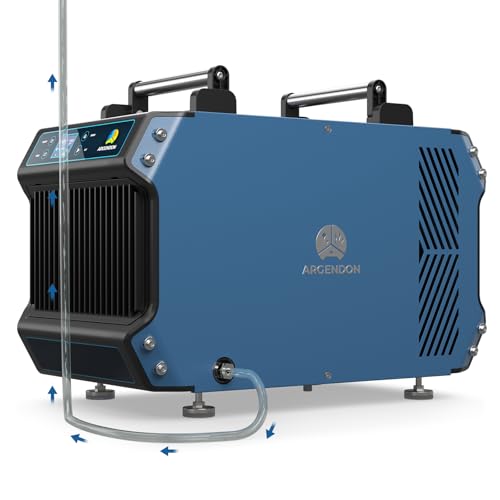
#3 – ARGENDON: Best Budget Commercial

Key Specifications
- Moisture removal: 60 PPD (AHAM), 145 PPD at saturation
- Coverage area: Up to 1,800 sq ft
- Smart control: No Wi-Fi (manual controls)
- Built-in pump: Yes, up to 19.6 ft drain reach
- Operating temp: 41°F to 95°F (auto defrost)
Mini Review
The ARGENDON 145 Pint is the unit my buddy installed under the convenience store he runs, and he swears by it as one of the best crawl space dehumidifiers for buyers who want commercial-grade extraction in a compact size. I trust his read on this one even without testing it myself. It delivers 60 PPD at AHAM and 145 PPD at saturation, with 1,800 sq ft coverage that outranges both the AlorAir and Aprilaire at similar pricing.
The built-in pump pushes pints of water up to 19.6 feet with no floor drain required. Auto defrost handles cold conditions, and ETL certification meets commercial safety standards.
No Wi-Fi here – step up to the AlorAir HDi65S or Aprilaire E070W if remote monitoring matters. For pure extraction value, this is a great choice.
Pros
- 1,800 sq ft coverage outranges same-tier competitors
- Built-in pump with 19.6 ft drain reach
- Auto defrost for cold crawlspace operation
- 5-year warranty with ETL certification
Cons
- No Wi-Fi or smartphone app control
- Less established brand than AlorAir or Aprilaire
- Manual controls only – no remote setpoint adjustment
Where to Get It
#4 – Santa Fe Ultra: Best Efficiency

Key Specifications
- Moisture removal: 98 PPD
- Coverage area: 2,300 sq ft
- Smart control: No Wi-Fi (wired controls only)
- Built-in pump: Optional add-on (gravity drain standard)
- Operating temp: 56°F to 95°F
Mini Review
The Santa Fe Ultra98 made my list based on the criteria I weighted most heavily — it stands apart from the best crawl space dehumidifiers on this list with a deliberate trade-off: top-tier energy efficiency and MERV-13 filtration over Wi-Fi. The result is the most energy-efficient unit in the 90-100 pint category – 98 pints of moisture per day at just 5.9 amps – with a reliable design built for year-round operation.
The 2.95 energy factor costs noticeably less to run versus comparable-capacity units over the long run. The MERV-13 filter captures airborne particles and allergens well beyond standard filters, and the optional fresh air pathway improves whole-home IAQ.
The missing Wi-Fi is the real limitation for smart home buyers. If app monitoring matters, the Aprilaire E070 covers 70% of the capacity with full remote connectivity.
Pros
- 2.95 energy factor is highest in its class
- 98 PPD covers large crawlspaces and basements easily
- MERV-13 filtration removes airborne particles and allergens
- Optional fresh air ventilation improves whole-home IAQ
Cons
- No Wi-Fi or smartphone app of any kind
- 81 lbs requires help to install in crawlspace
- Higher investment compared to comparable-capacity units
Where to Get It
#5 – MOUNTO LGR: Best High-Capacity

Key Specifications
- Moisture removal: 155 PPD (AHAM), 268 PPD at saturation
- Coverage area: Large spaces, basements, job sites
- Smart control: None (commercial manual controls)
- Built-in pump: Yes, 15 ft lift head
- Operating temp: 41°F to 105°F
Mini Review
The MOUNTO 268 Pints LGR earned a spot on my list as the commercial-tier option I evaluated against the field, and it is one of the best crawl space dehumidifiers for extreme moisture situations. It uses LGR technology to keep extracting even after humidity drops below the point where standard units stall.
At 268 PPD at saturation and 155 PPD at AHAM, it outperforms standard commercial units in this tier. The built-in pump handles drainage with a 15 ft lift head, and the wheels allow repositioning across larger footprints.
For serious seasonal flooding or newly encapsulated crawlspaces, consumer-tier units often can’t pull fast enough. The MOUNTO handles what they can’t.
Pros
- LGR technology extracts at low humidity levels standard units can’t reach
- 268 PPD saturation capacity for severe moisture recovery
- Built-in pump with 15 ft lift head
- Wheels for mobility in larger spaces
Cons
- No Wi-Fi or smart home integration
- Commercial weight and noise level
- 1-year warranty shorter than consumer-class units here
Where to Get It
#6 – Hisense 60 Pint: Best Portable with Pump

Key Specifications
- Moisture removal: 60 PPD (DOE), Energy Star certified
- Coverage area: Up to 4,500 sq ft
- Smart control: None (manual 3-speed + 24-hour timer)
- Built-in pump: Yes, with quick-connect hose for window/sink drainage
- Operating temp: 38°F to 95°F
Mini Review
The Hisense DH6024KP1WG is the portable pick I evaluated against the field for buyers who want serious coverage without a hardwired commercial install. It is one of the best crawl space dehumidifiers if you need flexibility to move the unit between a crawlspace, basement, or garage as seasons shift.
At 4,500 sq ft coverage with a built-in pump that pushes water out a window or up to a sink, it fills the gap between residential-tier units and full commercial LGR machines. The 3-speed fan and 24-hour programmable timer let you tune runtime to humidity load without babysitting.
It is not the quietest option in the lineup, and it lacks Wi-Fi. But for crawlspace owners who want one unit that handles a large footprint and self-pumps drainage without permanent plumbing, the Hisense earns its slot.
Pros
- 4,500 sq ft coverage handles large crawlspaces and basements
- Built-in pump with quick-connect hose for window or sink drainage
- Energy Star certified for lower operating cost over time
- Portable design with wheels for repositioning between rooms
Cons
- No Wi-Fi or smart home integration
- Louder than wall-mount commercial units in this lineup
- Not designed for fully sealed encapsulation use cases
Video Review
This walkthrough covers the Hisense pump dehumidifier line including setup, the built-in pump operation, and real-world drainage in a basement.
🎥 Video Credit: third-party YouTube review of Hisense built-in pump dehumidifier line
Where to Get It
How to Choose a Crawl Space Dehumidifier
Still deciding which of the best crawl space dehumidifiers fits your situation? Here’s the short version of what I actually look for, plus a Pinterest pin you can save for later.
📌 Hover over the pin to save it for later

Crawl Space Dehumidifier Sizing Guide
Match the unit’s pints-per-day (PPD) rating to your crawlspace size and moisture load. Use AHAM-rated capacity, not saturation specs — they tell very different stories.
| Crawlspace Size | PPD Rating (AHAM) | Example Pick |
|---|---|---|
| Under 2,000 sq ft | 50–70 PPD | AlorAir Sentinel (Pick #1) |
| 2,000–2,800 sq ft | 70–100 PPD | Aprilaire E070 (Pick #2) |
| 2,800–4,500 sq ft | 100–150 PPD | Hisense 60 Pint (Pick #6) |
| 4,500+ sq ft or severe water damage | 150+ PPD (LGR-grade) | MOUNTO LGR (Pick #5) |
What Actually Matters in a Crawl Space Dehumidifier
After evaluating these against the field, here’s what actually matters when shopping for a crawl space dehumidifier.
- ✨PPD rating must match the space, not the sticker. Saturation specs run high under perfect lab conditions; AHAM specs reflect real residential performance. Always check both numbers before buying.
- ✨Built-in condensate pump is non-negotiable. Crawlspaces almost never have a convenient floor drain. Every pick on this list has a built-in pump that pushes water up to a sink, sump pit, or out a window — no manual emptying, no gravity-feed gymnastics.
- ✨Low-temp operation below 40°F is where cheap units fail. A dehumidifier that quits at 50°F is a summer-only tool. The Aprilaire E070 and Santa Fe Ultra run through the cold months when crawlspace humidity is at its worst.
- ✨ETL or AHAM certification beats marketing claims. Sealed-design compatibility for encapsulated crawlspaces matters too — verified specs from independent testing, not vendor promises. Skip anything without a real cert.
- ✨Smart features are nice; the basics close the deal. Wi-Fi smart control, smart sensing auto-start, MERV-13 filtration, and a programmable humidity setpoint are real upgrades — the Aprilaire E070 nails them. But a unit that can’t run at 38°F with a built-in pump is broken at the foundation, no matter how clever the app is.
Frequently Asked Questions
Here are the most common questions I found while researching the best crawl space dehumidifiers.
1. What makes a crawl space unit different from a regular dehumidifier?
The best crawl space dehumidifiers are built for low clearance installation and continuous operation. They include stronger drainage systems, corrosion resistant components, and reliable performance in colder conditions. Unlike portable units, they handle higher moisture loads over long periods, which makes them better suited for enclosed crawlspaces where standard residential dehumidifiers tend to fail early.
2. What humidity level should a crawlspace dehumidifier be set to?
A crawlspace dehumidifier should typically be set between 50 and 55 percent relative humidity. The best crawl space dehumidifiers maintain this range consistently to prevent mold growth and wood damage. Staying above 60 percent increases moisture risk, while going too low can overdry materials and reduce efficiency in enclosed crawlspaces over time.
3. Can the best crawl space dehumidifiers help prevent mold?
These units help prevent mold by keeping humidity below 60 percent. Mold requires moisture to grow, so controlling humidity limits its spread on wood, insulation, and other surfaces. Consistent operation and proper sizing are critical, especially in sealed crawlspaces where moisture can build up quickly without adequate ventilation or airflow.
4. Do crawlspace dehumidifiers require a floor drain?
Most crawlspace dehumidifiers do not require a floor drain because they include built in condensate pumps. The best crawl space dehumidifiers can push water through a hose to a drain, sink, or sump. This allows flexible installation in tight spaces where gravity drainage is not practical or where the nearest drainage point is located uphill.
5. Are these units expensive to run year-round?
The best crawl space dehumidifiers are designed for efficient long term operation. Energy usage depends on capacity, runtime, and humidity levels. Units with higher efficiency remove more moisture per kilowatt hour, reducing cost. Maintaining proper humidity is typically far less expensive than repairing structural damage, mold issues, or insulation problems caused by excess moisture.
Best Crawl Space Dehumidifiers: Verdict
 You’ve seen how the best crawl space dehumidifiers compare and where each unit earns its spot in the full lineup.
- Choose the AlorAir Sentinel HDi65 for tight clearances and cold climates, or step up to the Aprilaire E070 when sealed coverage above 2,000 sq ft and smart sensing matter most.
- Choose the ARGENDON 145 Pint when you want commercial-grade extraction without the commercial price, or the Santa Fe Ultra98 when MERV-13 air filtration and year-round energy efficiency justify the premium.
- Choose the MOUNTO 268 Pints LGR when extreme moisture or water damage recovery demands LGR-grade extraction the residential units can’t deliver.
Whichever unit you land on, you’re giving your home’s structural wood and indoor air quality a real fighting chance for the long haul, season after season. A dehumidifier is only useful if it’s actually running. If power outages are a concern, my guide on the best solar generator kits covers the backup power options worth pairing with always-on appliances.

Love tech? Subscribe for iPhone tips, fun tech tips, unboxings, and reviews.
Subscribe Now